Pages

Showing posts with label conf. Show all posts

July 10, 2018

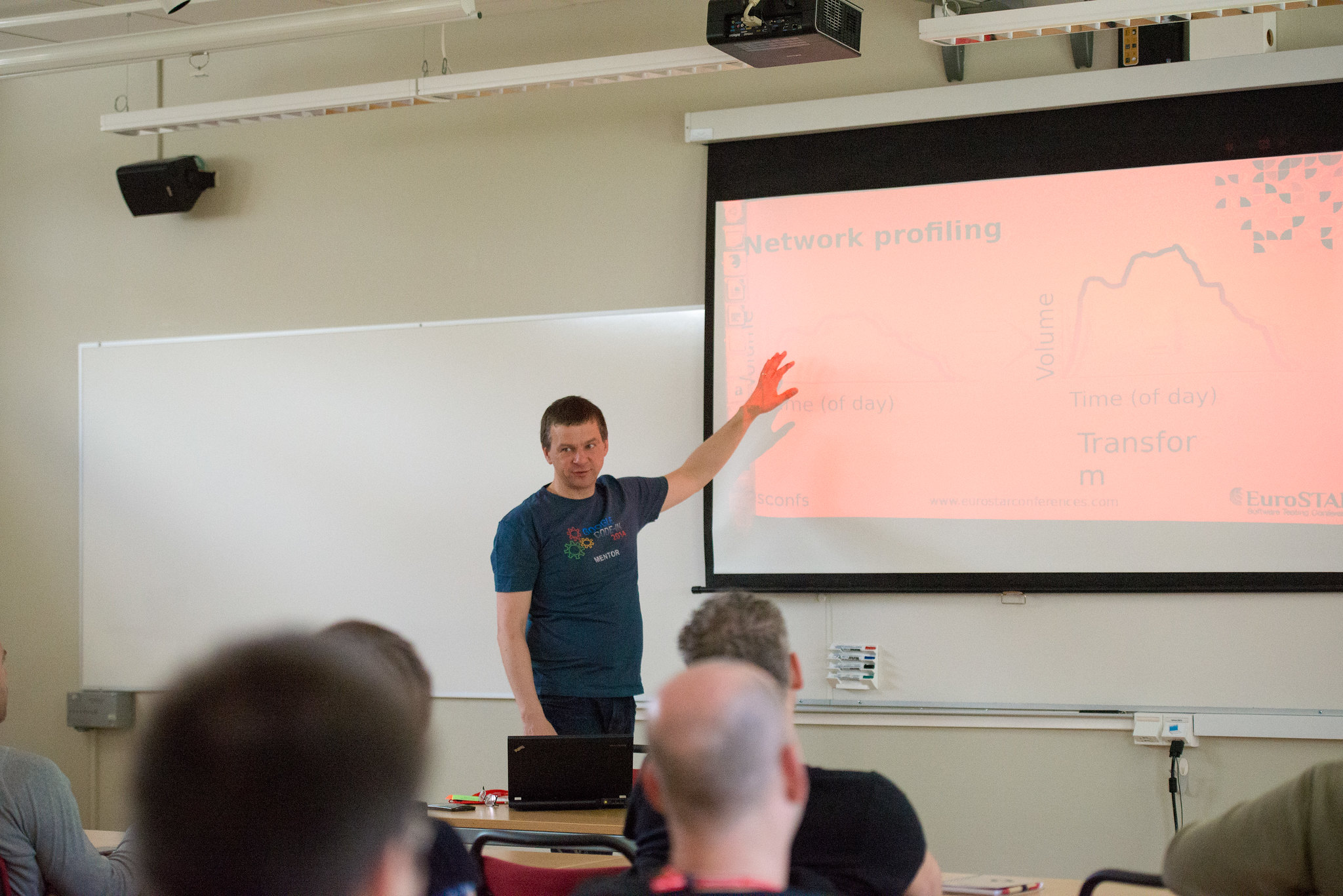
Nortal Summer University Workshop "Getting Started With Web Testing"

In June Nortal has held traditional annual Summer University for developers, analytics and testers. This is an internship program for juniors, who want to make a career in IT. Generally they are IT students, but not necessarily, so everybody in Estonia, Finland, Lithuania or Serbia had a chance.


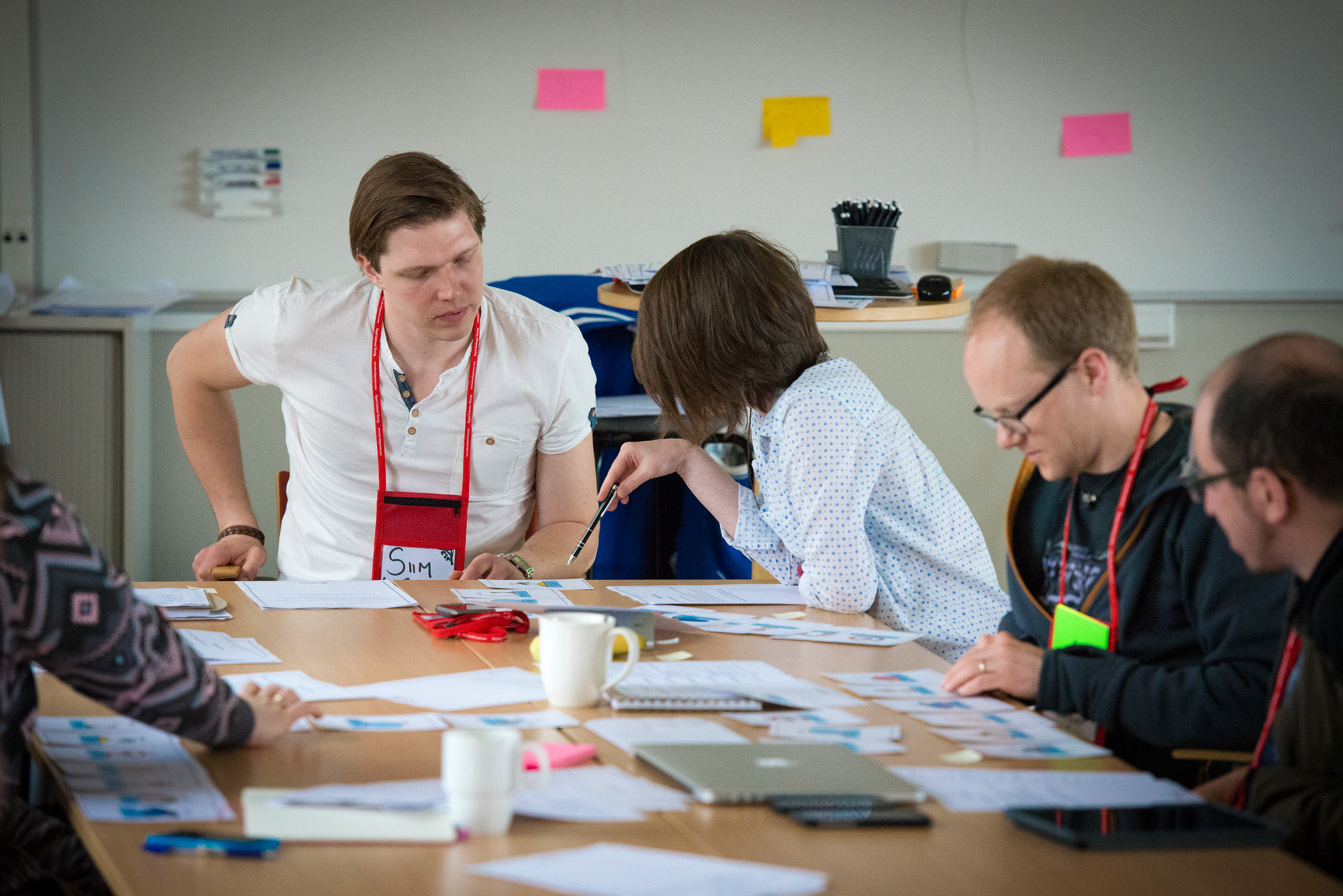
This year I did a 2h hands-on workshop Getting Started With Web Testing, which is partially based on the last year's workshop What Tools To Use To Test Better? There was small theoretical part about browsers and three practical exercises about DevTool, web accessibility and security. I leave slides here, just in case, but I don't believe that you find something interesting there.


Practical exercises can be more useful for you – they are available at GitHub repo github.com/iriiiina/nsu. You can find all three exercises, used tools and further reading suggestions there. The workshop was made for non-IT people, who were not encountered testing before, so exercises are quite simple and trivial.

On last year's post I had following lessons-learned about previous workshop:

The presentation was indeed slow for some IT students, because they already knew DevTool and may be some other stuff. So one of the lessons for the next time is to create more flexible content and give an opportunity to dive deeper for people who are bored.

This year there was fewer IT students, but I still tried to divide exercises on smaller parts. For example, I didn't give 10m of theory + 20m of personal time on one exercise, but 5m on small task + 5m of personal time + 5m of discussion and new small task + 5m of personal time etc. That went quite well for me. But some IT students were still a little bit bored, because they already knew a lot of basic stuff.

The second lesson is better plan less and make more breaks, which in this case worked great for me. I was actually surprised how timing went well this time.

I am not sure about this lesson now. This time I made too much time for QA part, which ended much quicker than I thought. I think this year I would modify this lesson: better plan some backup topic that you can talk about if there is left some time at the end. In fact, I was planning to talk about web automation if time is left, but refused this idea because you can't talk about automation briefly.

And the last lesson is don't waste time on technical stuff that doesn't matter for the main goal. For example, don't mess with creating your own REST services if you want to show Postman.

This is absolutely true. In fact, this year I used basically the same one exercise with minor modifications. If you open all three exercises, you can see that they look almost identical. The difference is in the back-end. For example, on second exercise about accessibility image without alt tag is added, on last exercise about security cookie is added etc. I forgot to remove annoying pop-up dialogs on the second exercise, my bad, but I am still glad I choose this approach, because juniors can focus on specific features that are important, without need to learn new environment and design.


This year I didn't get any specific feedback, but main point is the same: participants have very different background, so either basic part is too boring or advanced part is too confusing. As always, there should be too many trade-offs.

June 21, 2018

GeekOut vs Nordic Testing Days

This year instead of Nordic Testing Days conference I decided to visit developer's one – GeekOut. Here is a brief overview of GeekOut 2018 and some comparision with Nordic Testing Days 2017 from tester's point of view.

Some raw facts for beginning:
  • both conferences are located in Estonia, Tallinn
  • both are being held on the exact same days, at the beginning of June
  • both have very decent list of well-known speakers


GeekOut offers 2 days of conference talks mainly about Java world. On the first day they have only two tracks, which are more general and lightweight. On the second day there are three tracks with more technical talks. Considering great party at the end of the first day, it's a little bit strange for me to have more hardcore talks on the next day after the party. As I already mentioned, all talks are for listening and there are no practical workshops at all, even small ones. This is a big downside compared to Nordic Testing Days, where you can have full day tutorial on the first day and two days of conference mixed with practical tracks.
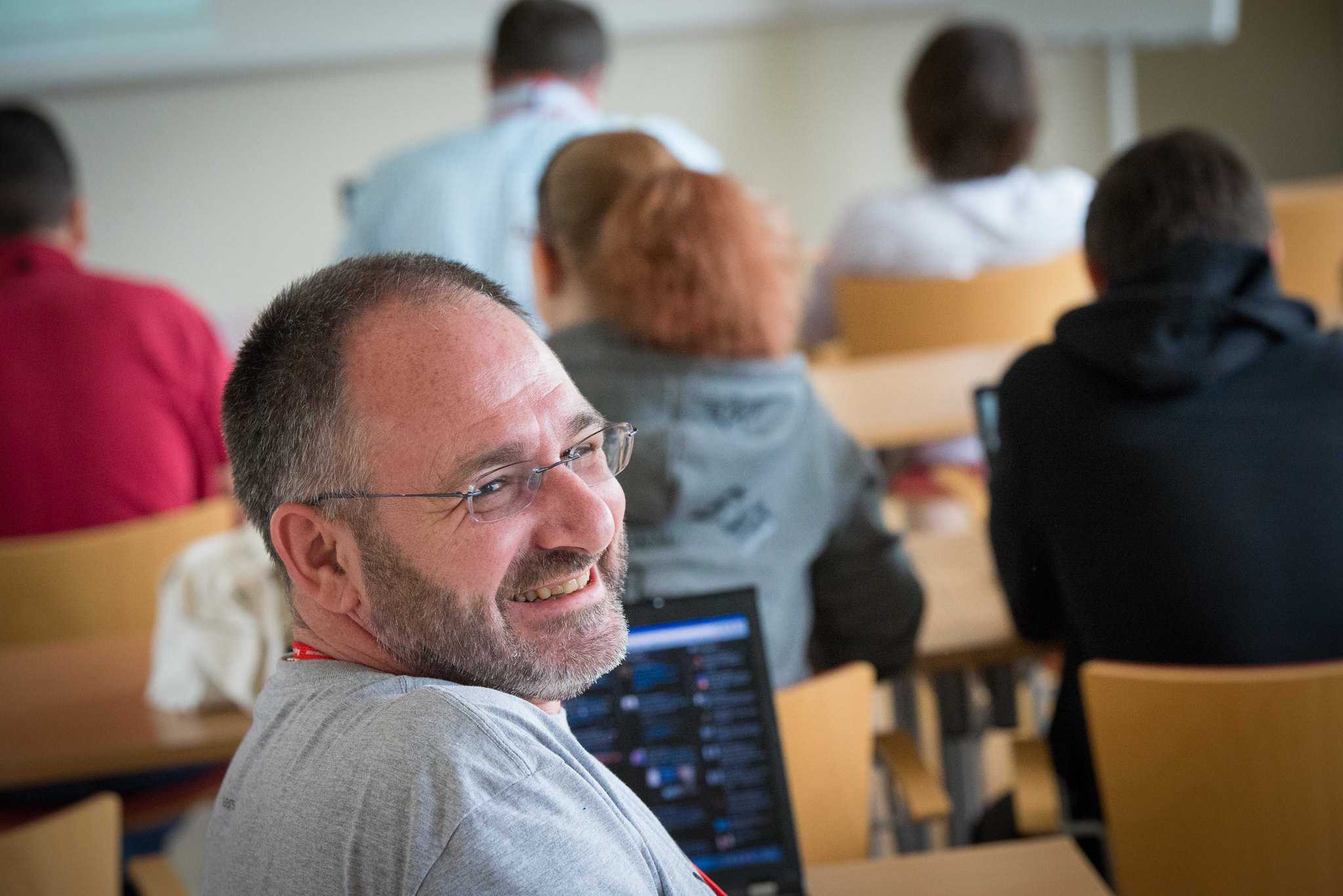
The venue is not a hotel. All NTD attendees will understand me, because it is really cool when you have a conference, tutorials, lunch, party, bed and breakfast at one place. You save a lot of time. GeekOut was held at Kultuurikatel, which a former Tallinn power plant and is one of the coolest venues in Estonia with a great atmosphere, but I am note sure is it worth it.


The food was great. Queues were quite long, but the food was totaly worth it.


Sponsors, booths, challanges and corporate swag are basically the same. There is a little bit more swag from conference organizers at GeekOut than at NTD – for example, you get t-shirt and a cool bag with GeekOut logo at registration table, which is nice.


Nortal (the company I work for) had a Tech Radar at their booth. Briefly, everyone could add some tool, platform, framework or technique on the board and mark whether it must-try or must-avoid stuff. At the end we have quite good statistics about favorite technologies of Java developers. You can read Nortal's blog post about it, if you are interested in details: GeekOut 2018 participants tell Nortal what’s hot and what’s not.


The party. Food and drinks were cool. Short films were awsome (the theme of the party was movies). I didin't like music and it was too loud for talking and networking stuff. But I am not a party person anyway, so can't tell you a lot about it.


And last, but not least – the content. I really liked the first keynote by Derek Mathieson "CERN, from an IT Perspective". I suggest you to watch the video on GeekOut page. It's nothing about IT actually, it's just interresting story about CERN.

I liked talk about Java Next - New Releases, Valhalla, Amber, and More Goodies by Nicolai Parlog. This one is specific for people who can decide whether is Java being updated in the project or not, but still interesting talk.


I liked the second keynote by Martin Thompson High Performance Managed Languages. I didn't understand all things that he was saying (too hardcore for me), but I think that it is the property of a good talk.

And that's it, basically. Only 3 talks that I liked. Others were eather too general or too specific for me.

All videos are available on GeekOut page – videos. As for me, next year I would prefer Nordic Testing Days, but I am not sure why. I can't say that GeekOut is worse, I guess it's just a role specific stuff.

June 18, 2017

Nortal Summer University Workshop About Tools for Front End Testing

On last week Nortal held Summer University once again for junior specialists who want to join us. The first week was about general introductions and workshops just to give a taste about Nortal itself and about the role of juniors (some of them are developers, some of them analysts and testers, of course). So I did a small workshop about tools for testing front end and I want to share some thoughts about it.

The content of the workshop is available at GitHub repo – github.com/iriiiina/nsu. You can find three exercises, used tools and further reading there. The workshop was made for non-IT people, who were not encountered testing before.

First two exercises I've made specifically for this workshop, so you can find some hidden bugs in HTML and JavaScript code using DevTool or some browser extensions. Third exercise was about REST services and Postman, so the link is just a sandbox where you can take a lot of different types of REST services.

The slides are here, but they are not very useful without the explanation:


This is the first workshop that I would like to reuse and improve – I never wanted to repeat any of my previous workshops before. I don't know why, may be because this one is simple and can be introduced to any kind of specialists and levels.

I didn't get a lot o feedback from participants (there was about 10 people), but here are some:
  • I found front-end testing tools part really useful.
  • Very informative, nicely composed workshop plan.
  • Very useful tools; a bit hard to follow the demonstration at times.
  • The topics were cool and informative but the presentation was a little slow.

The presentation was indeed slow for some IT students, because they already knew DevTool and may be some other stuff. So one of the lessons for the next time is to create more flexible content and give an opportunity to dive deeper for people who are bored.

The second lesson is better plan less and make more breaks, which in this case worked great for me. I was actually surprised how timing went well this time.

And the last lesson is don't waste time on technical stuff that doesn't matter for the main goal. For example, don't mess with creating your own REST services if you want to show Postman. Or don't deal with data base if you want to just print some data (you can save it into browser storage or into session). It went quite well this time as well, mainly because I had a limited time for preparation, so external limitation didn't allowed me to play with all this stuff, which is sure interesting, but makes everything more complex.

In summary, this was the first workshop that didn't make me think that I hate public speaking. Maybe because I was least prepared for it and improvised a lot.

June 11, 2017

Nordic Testing Days 2017 Summary

This year I participated only on two conference days of Nordic Testing Days and didn't take any tutorial. Here is a small summary about tracks I took (the order is chronological).

[keynote] Enjoy the Ride! by Henrik Roonemaa

Very good talk for the keynote: interesting, not very technical and a little bit off topic. Some short takeaways:
  • There are two types of bad products: those that exit the market and those that enters it.
  • iPad has a great intuitive design – that's why it's the future. Not for technical people, but for the majority.
  • In the internet you are for everybody or for nobody.
  • The product should do something for me, not me doing something using the product.

[workshop] How to Build a Robust API Checking Framework by Mark Winteringham
Nothing new for me. One good phrase: if you submit a form for many times, what do you test: UI or API?

[workshop] Me, Myself and Siri by Sami Söderblom
It was not very useful, but really fun. There was a small part about other AI systems besides Siri, but just as references. In summary – you can't really use Siri at work now: may be in a combination with clicks if you really want to, but it's not faster than usual computer usage. However this workshop was way better, than many so called "useful" ones.
Interesting links:
  • @seeBotsChat – Twitter account of two AI robots speaking to each other
  • Quick Drawing – game-ish neural network, that recognizes human's doodling
  • Perpective – API that tells you how many people will be abused by your text etc
  • Wolfram Alpha – API that measures and compares everything

[keynote] Creating Yourself as a Tester – make your own testing path by Alan Richardson
  • Describe rather than define.
  • Do notes about how you work and analyse them later to work better.
  • People who came up with software testing knew math and physics very well and they generalized some complex stuff to known testing methods. But to understand the roots of these methods you could learn math and physics as well.
  • People are complex systems. If you are trying to copy someone you are coping only high level of the whole system. That's why you need to develop your own system with roots and low levels.

[keynote] 10 Commandments for Ethical Software Testers by Fiona Charles
  • Developers don't even know that libraries, that they are using, collect users data.
  • Big data is fed into fare and independent algorithm, but this data was selected by someone. Data is biased.
  • There are risks in acting, there are risks in not acting. How much risk do you tolerate?
  • If you have concerns – make good solid notes for future evidence.
  • We develop systems, because we can. Not always because it makes the world a better place.

[workshop] Just Enough JavaScript to be Dangerous by Alan Richardson
The level of the workshop was "like fish in the sea", but as for me it was more for beginners. But I have learned a couple of new tips: like iterating an array in JavaScript without a loop or snippets in Chrome DevTool. Also that button as not a button element is bad, because it leads to cross-browsers problems.

[talk] Test Your Java Applications with Spock by Iván López
Best track on the whole conference! There is a funny thing: the best talk on testers' conference was from a developer. It was actually a demo, where unit tests on Spock and Groovy were shown. And here is a second funny thing: it doesn't need to be a workshop to learn a technical stuff. Iván López just showed really cool features of Spock (like presenting an arrays in tables for data driven testing), so I definitely will try it at work.

[talk] A Story of a Tester Building his First Mobile App by Risko Ruus
Good short talk about how idea came true as an app.

[talk] Determining Your Application's Heartbeat Through Monitoring and Logging by Gwen Diagram
General talk about need of proper logs and monitoring systems. Maybe useful for beginners who didn't encountered real projects yet.

[keynote] Building Smart and Reliable Self-Driving Robots by Kristjan Korjus
Perfect for final keynote, but I wish the robot do more stuff on the stage.
  • They limit speed of the robot to 6 km/h, so it won't be classified as self-driving car and won't fall into regulations.
  • Software can help to get maximum out of a crappy hardware.
  • They don't have tests and documentation, because hardware is changing too quickly.
  • To avoid security issues related to 9 cameras on robots, no person ever see pictures with normal resolution, so it's impossible to see numbers or faces.
  • Craziest people are in London, who says something like that's my street, I don't allow robots here!
  • There is no self-destruction system, because they don't have tests and what if there is a bug in this system? :)


Other Stuff Mobile app is super cool! I don't see point in notes and feed, but favourite tracks in the schedule, notifications and feedback is very convenient.

Notebooks with conference floorplan and tracks description is cool, as always.

Drum show with drum sticks is the best!

October 24, 2016

Why I Don't Like Testing Conferences


The painting: "The Witches’ Cove" by Jan Mandijn

The best book about software testing has following introduction: "This book is about software development as we've experienced it." ("Lessons Learned in Software Testing" by Cem Kaner, James Bach, Bret Pettichord). Because you can't talk about testing without the context of the general development itself.


I like conferences – they are usually very inspiring, motivating and sometimes challenging. Visiting testing conferences gives a lot of ideas how to do my job better, but almost always that means improving some processes at the project. And it's almost impossible to change some steady process if more than 10 (or even 5) people are involved in it. To change the process you need to convince all team members that it brings benefits to the project or product. And to convince team members you need to retell the story you heard on the conference (which usually is as long as the conference talk or even longer with all the preparations you need to do) and to be talented speaker (usually inspiring speakers at the conference are good at speach), which in major cases is not true. So, wouldn't it be better that all (or maybe the key ones) team members just visited the conference all together to hear the same talk from experienced speaker and be inspired all at a time?

Majority of the people in the audience is having some ideas during the talk, they are very inspired and willing to do some changes in their project, they came back to work and start to talk about these changes with developers or project managers and then... they get couple of arguments why it won't work in this specific project. And this person, who visited the conference, is not so skillfull as the speaker to pitch other team members. So everyone thinks he is a boring tester who constantly offers some silly ideas.

This is not just impractical, this is harmfull. It brings discord between programmers and testers (and analytics, but programmers vs tester is the most popular confrontation). Programmers doesn't understand why testers suggest to do their life harder, because they haven't heard the same speach. For example, the idea to involve testers into the development as early as possible may seem to be silly if you hear that from one junior tester who visited some conference ("he doesn't understand anything at the early stage and I don't have time to explain it" – may say some programmer). But the same idea from the experienced speaker on the stage is not so silly anymore (at least you need to have a proper argument to argue with it).

I'd like to have conferences about software development generally, where all roles can participate. Surely, there should be specific conferences for testers and programmers, where speakers may talk about how to automate tests, which tools can be used, how to do security or performance testing. However questions like why we need automation, why we need security, at what stage of the project we need to thing about security, how ofter we need to release updates in production should be convered in general conferences, because these are the problems where all team members are involved. The problem is that I don't know any widely spread good conference about software development generally - all good conferences are role specific.

After all, all team members have one common goal – to create a product (good teams have goal to create a qualitative product). Both testers and developers works for the same goal, but visiting different conferences they start to see the same goal from two different perspectives.

June 11, 2015

My First Ever Workshop at Nortal TechDay 2015


Recently I did my first ever workshop at the conference (it was Nortal company inner conference, so you probably haven't heard about it). It was some sort of bugbash, where participants had to find bugs and vulnerabilities in certain application. The application was written by me using Angular.js, JavaScript, Node.js and it used REST services and DB. All the technical part was on me and documentation part on Alla Tarnovskaja – co-author of the workshop.

As we started to use Angular.js and REST services in our company, the idea was to give some insight about some potential bugs that may appear in these technologies. Participants didn't have any documentation or specification – just the application with very simple functionality and a lot of bugs with different level of complexity, so every tester could find at least one bug. Testers worked in pairs, so there was an opportunity to share experience. Pairs had about 1 hour for testing, after what I revealed known bugs and some pairs shared their bugs that I didn't mentioned about. Also in the middle of the workshop we published some tools, that we suggested to use to explore the application – it was a little hint for testers, who were out of ideas.


Alla Tarnovskaja drew beautiful pictures specially for the workshop. This bug is defeated by Nortal team.

My main fear before workshop was stability of servers – application uses web and REST servers (on Node.js) and as I didn't write them before I was scared that testers will put them down with some injections or special symbols. And they did. They put REST server down about 10 times and web server – 2 times. But during the workshop I constantly monitored logs, so I managed to put them up again in a very short time (1-2 seconds), so general downtime is not more than 2 minutes. The problem is, that all pairs used the same servers, so if one pair managed to put it down all pairs didn't have access to application anymore. I was thought about giving source code of services and application to all pairs, so they could launch them on their own machines (or on virtual machines) and don't depend on others injections, but these things usually take a lot of time in the beginning and we didn't had that time.

One idea that came up during the workshop – it will be fun to do some beautiful logs of servers and put them on big screen, so every pair during the workshop could see what is going on on server. But you can do this only if pairs use one general server, which is risky.
Also I got a lot of ideas about bugs that I can put into application from workshops in Let's Test conference.

There is 2 things that I really liked in our workshop and didn't see in other similar workshops. First one – very detailed documentation about known bugs and how to reproduce them (documentation was opened at the end of workshop), so every participant could try to reproduce them at home, after the conference. Second one – one very interesting and hard to find bug, that nobody found. It's always a little bit boring to hear about revealing the known bugs if you have already found them by your own. More interesting is to see how to find bugs that you didn't found.

Doing workshop is fun and useful – usually I start to ask myself right questions only if I have responsibilities and fears. So making workshop is way more productive for me, than participating in it.

June 8, 2015

Let's Test 2015: Final Day 3

Software Talks by Julian Harty (@julianharty)


Photo from Let's Test Conference Flickr

Security Testing talk by Jari Laakso was replaced by this one. Julian Harty talked about mobile software, customers feedback and statistics. Some facts about Google: about 75% of bugs are not being fixed (usually it's minor bugs that are closed or postponed); GoogleAnalytics doesn't know data of one particular user, it aggregates all data into one big picture; there is not so much manual testers in Google – basically they collect data from users, which helps to find problems.

One very interesting thing about mobile testing: if your mobile application connects to the internet then you should test its traffic – it shouldn't send or receive more data than needed, because users pay for each byte.

And one lesson about customers service: developers (or somebody in product developing team) should follow users comments on store page. First of all, it's good source of problems and bugs. Secondly, if there is a reported problem without an answer, users are likely to report more negative comments and reduce the rating. If developers team answers that they are dealing with reported problem users are more likely to trust.

Coders To The Left by Jan Eumann (@JanEumann) and Philip Quinn


Photo from Let's Test Conference Flickr

Workshop about how to find bugs using the source code and how to fix them. Very useful workshop for me, because 5 days earlier I did something similar in our company internal conference. So it was interesting experience to see how other people doing same stuff as I did (especially, taking into account that it was my first workshop that I ever did).

During the session we worked in groups and had to find bugs and fix them. I discovered some new functionality in DevTool for myself and had a couple of ideas how I can improve application for my own workshop.


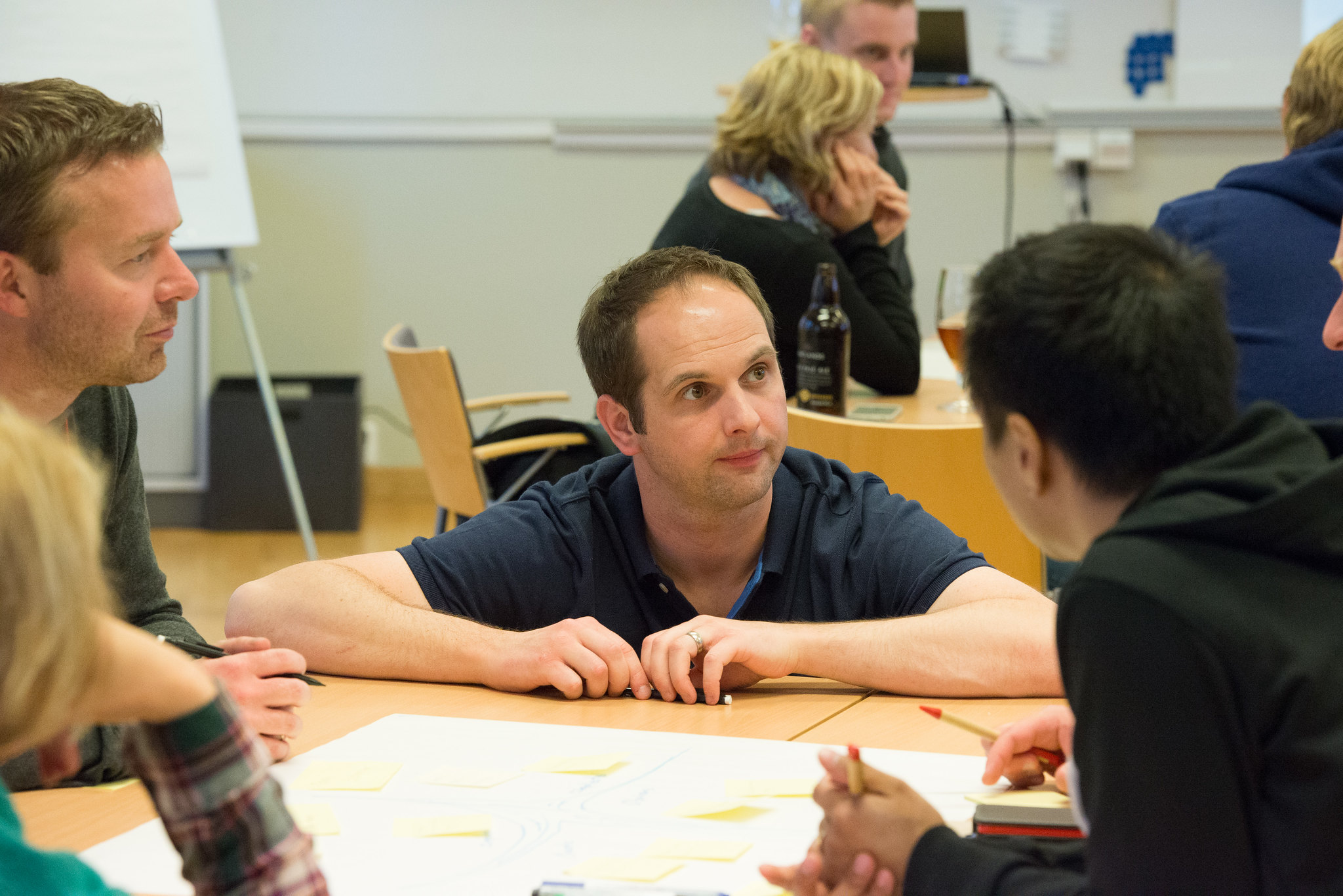
Me working in pair with Kadri-Annagret Petersen (@kadriannagret).
Photo from Let's Test Conference Flickr

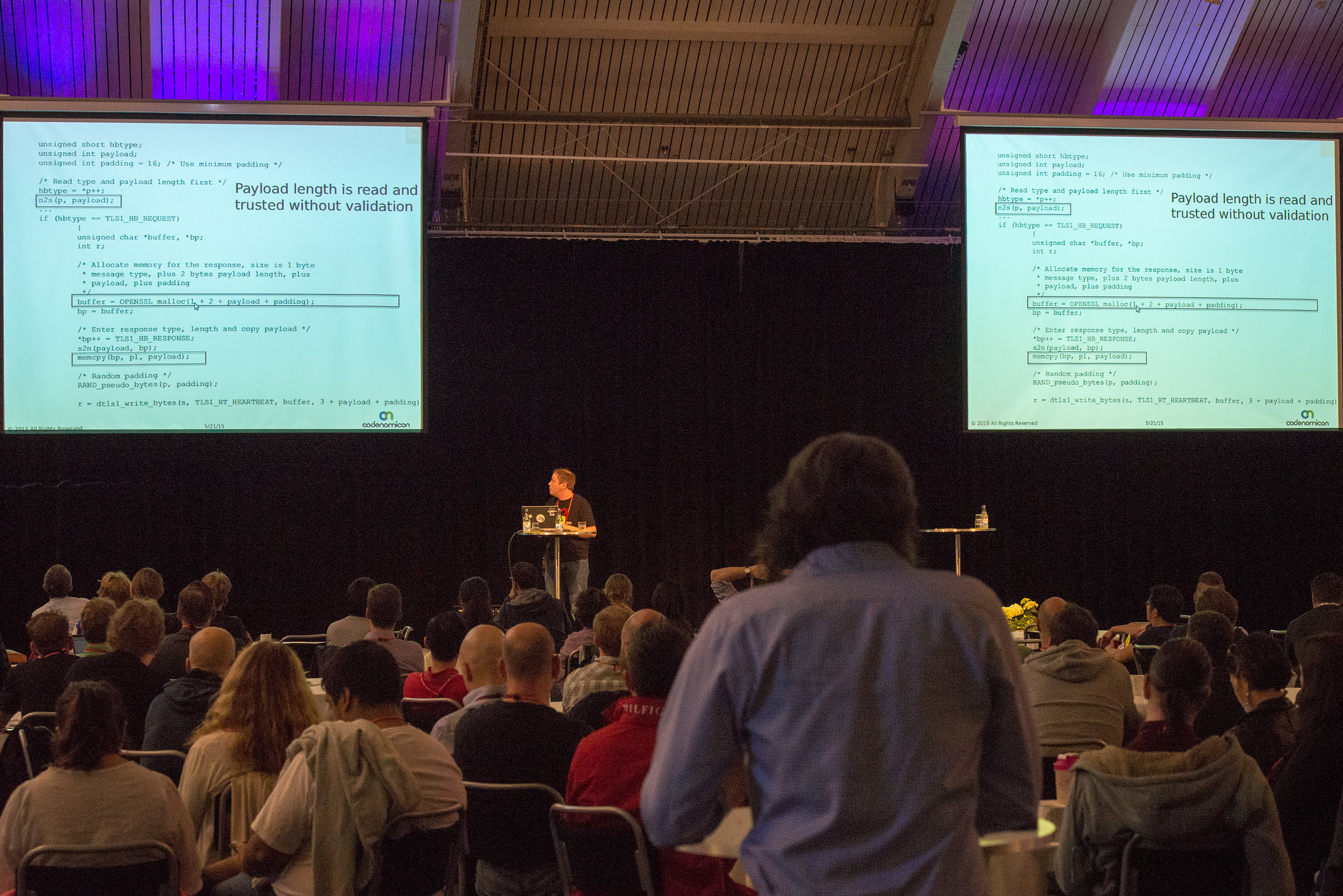
Closing keynote Detecting the Heartbleed Vulnerability by Tuomo Untinen


Photo from Let's Test Conference Flickr

Seems like the presenter was not very experienced (which was a big contrast with the whole conference), so it was hard to listen to this keynote. Especially hard to focus after so intensive days. But topic was very interesting, so I even have written some interesting points: finding heartbleed bug wasn't a luck, more like a decision; vulnerability was made in 2012 in last day of December, which is just coincidence. They wanted to put some honeypots to find out does somebody exploit this vulnerability, but it went to public too fast (by OpenSSL fault), so it didn't succeed.

Main takeaway – if you notice something new and unclear – try to understand it.


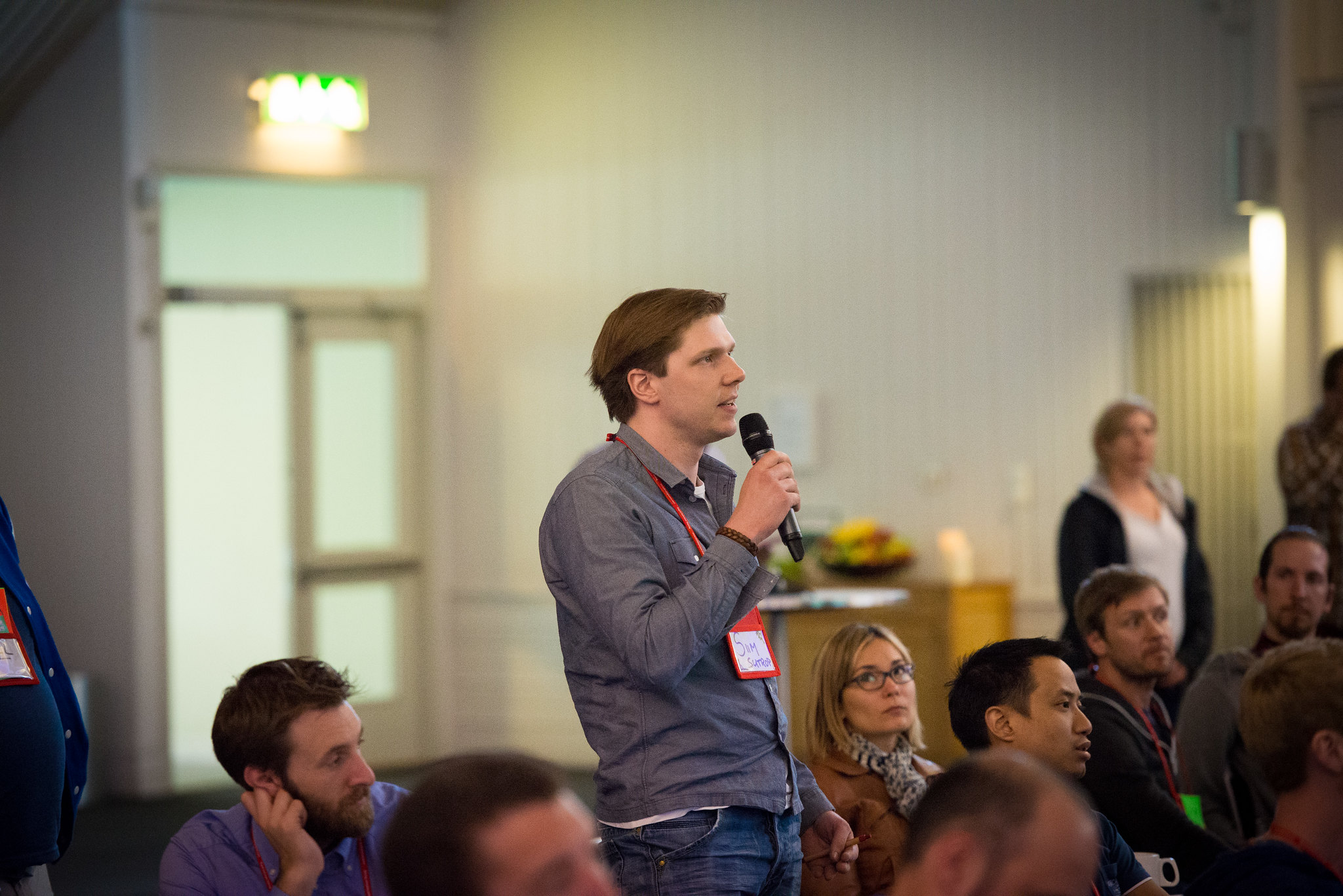
Siim Sutrop (@SiimSutrop) is asking quite interesting question – was finding heartbleed bug a luck or good testing? The answer – it was a decision.
Photo from Let's Test Conference Flickr

Summary

In the first post I have already written that it was the best conference I have ever attended at. I've met there a lot of open, smart and inspired people, who give a lot of energy and ideas. You can talk about testing there in very different aspects, for example, I even participated in small talk about testing and religion. So, if you have and opportunity to participate in some conference and don't know which one to choose – I definitely suggest to choose Let's Test. Next date is already known – May 23rd-25th 2016!


Me thinking about the conference during the final keynote.
Photo from Let's Test Conference Flickr


See posts about other days:
Let's Test 2015: Day 1
Let's Test 2015: Day 2, Exploring Web App (In)Security

June 5, 2015

Let's Test 2015: Day 2, Exploring Web App (In)Security

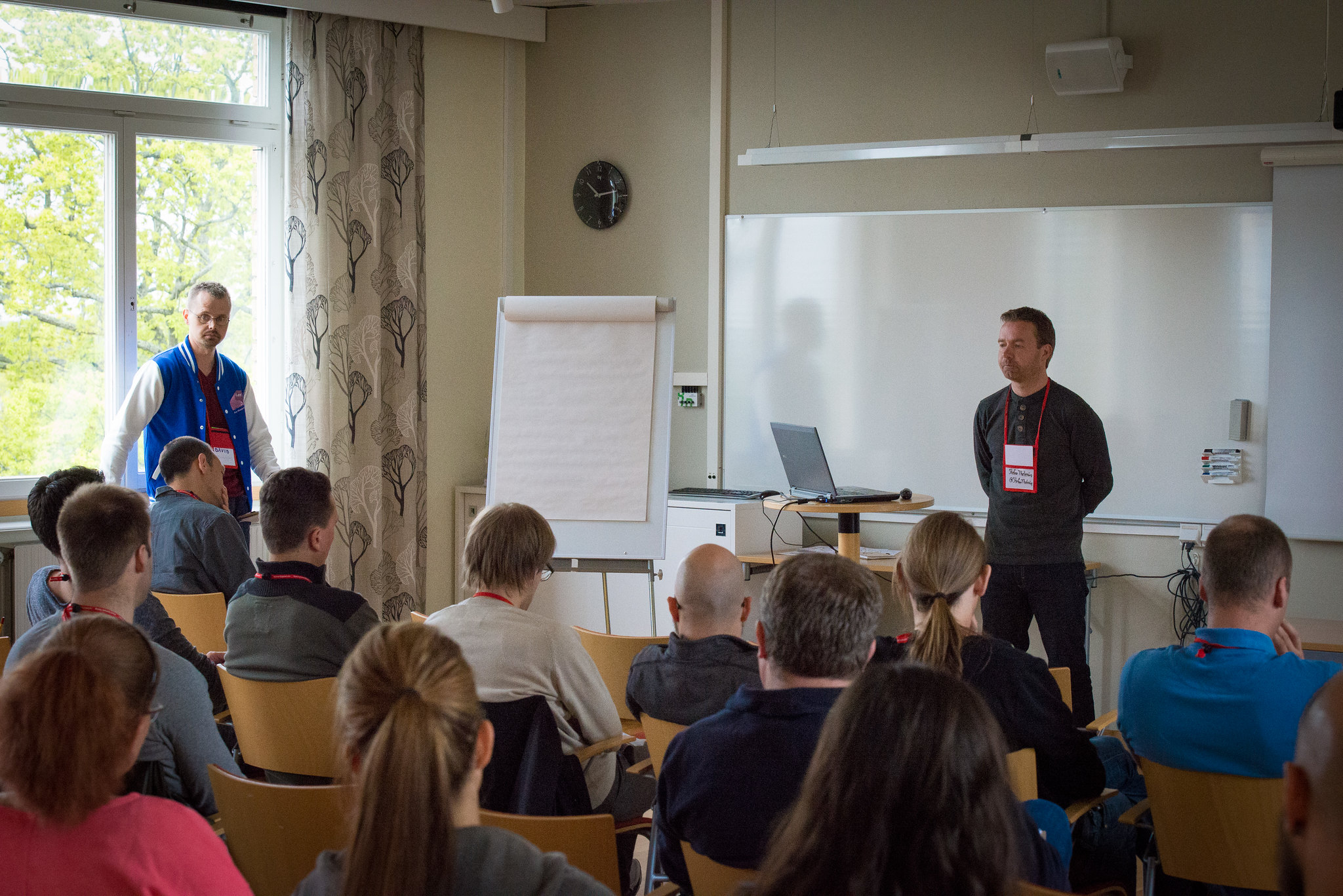
Testability Features by Stefan Thelenius (@StefanThelenius)


Photo from Let's Test Conference Flickr

Good talk for morning session, which gave me a lot of ideas about making testability features in my project (for example, I really like the idea to have some tool, that chooses random document from the DB). Stefan Thelenius showed us testing-application that their developers have made for testing real-application. Interesting thing, that testing-application appears thank to developers, who decided to test more (by them self, not by managers order) and found out that only setup and configurations take half a time. So developers decided to create some application that allows to spend more time on actual testing. A little bit sad, that testers still don't implement new features by them self, but asks developers for that. I think testers should strive to do their tools by them self.

But you should be very careful while implementing testability features – first of all, it shouldn't relate to production anyhow; secondly – usually testability features are not being tested (because of the lack of time), so more complex they are – more chance to get false results.

Exploring Web App (In)Security by Bill Matthews (@Bill_Matthews) and Dan Billing (@TheTestDoctor)


I am interested in security for about a year now. I remember great session of Dan Billing about New Adventures In Security Testing on previous Nordic Testing Days 2014. So, when I saw this workshop and Dan's name I immediately knew that want to join it. And my knowing didn't let me down – it was really useful and interesting full-day workshop.

Thanks to this workshop I have a long backlog of security things (test cases and tools), that I'm going to try at my work. I heard about them quite a long time ago, but now I have an idea about how actually use them.

During this workshop we had a lunch, where Baldvin Gislason Bern said interesting thing: statistics works only once, because further data begins to adjust to the metrics.

Cynefin Sensemaking Surgery by Duncan Nisbet (@DuncNisbet)


Photo from Let's Test Conference Flickr

Duncan Nisbet told us about interesting framework Cynefin (kʌnɨvɪn) and we even did some exercises, but I'm not still sure how to use it in real life. Agree, that it can add some sense in some hard situations, but its implementation is still quite vague to me. Or maybe I was still thinking about security and didn't hear important explanations.


One interesting (in some sense even philosophical) thing about transactions between different domains. There are 5 domains in Cynefin framework: Complex, Complicated, Chaotic, Obvious and something between them all. You can move through these domains, but there is one special boundary between Chaotic and Obvious – if you believe that all things are simple you can crush into chaos and it's nearly impossible to go back to Obvious domain (usually from Chaos you move to Complex). Other boundaries allow transactions.

TestLab

After all workshops open bar and TestLab again.


Photo from Let's Test Conference Flickr


See posts about other days:
Let's Test 2015: Day 1
Let's Test 2015: Final Day 3

June 2, 2015

Let's Test 2015: Day 1

Here is another post about Let's Test conference. You can read at least two more detailed opinions about it by Hannes Lindblom (@HannesLindblom) or Dan Billing (@TheTestDoctor). Also hashtag #LetsTest in Twitter is quite interesting reading.

Shortly – it's the best conference I have ever attended. Longly – it's not quite conference, but some kind of community meeting. The slogan on badge – "By Testers For Testers – Because People Matter" – is absolutely true.

I arrived at Runo a day before official start, so I also write a little bit about Day 0. Venue is very beautiful and it's a good place for knowledge and thinking. The level of all services (room, bed, food, wi-fi, number of outlets etc) was quite hight, so there were no distractions at all.

Every participant got a little bear, who suggest to test (see title on his shirt), nice notebook and badge. I liked, that every one should write their name (or whatever they want) on badge by them self, so they are all individual and unique. There were also 3 k-cards (red, green, yellow) for questions.

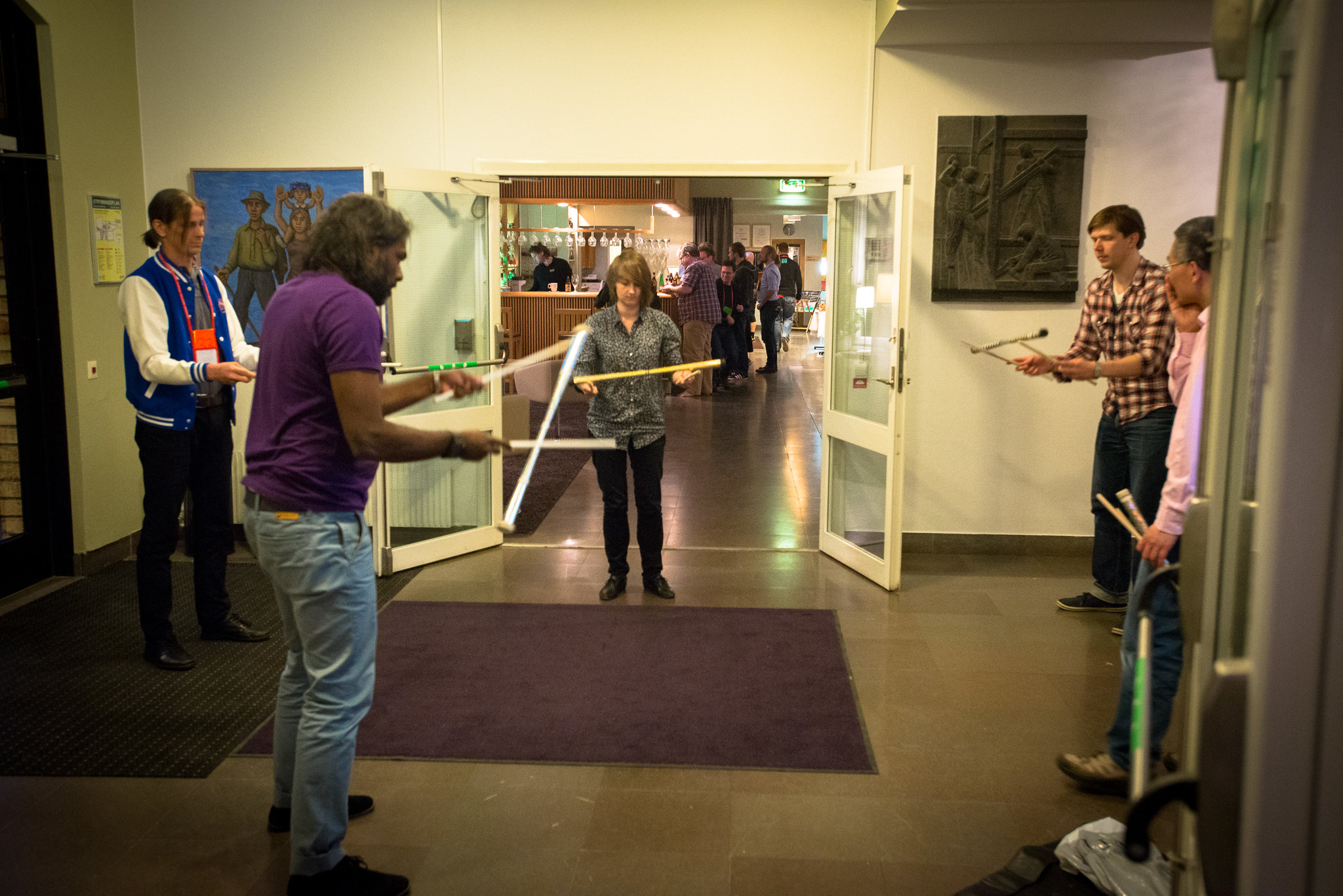
A lot of people also arrived on Sunday, so socialization part started immediately. Han Toan Lim (@MIndfulTester), who was doing a workshop What I Learned From Juggling, brought devil sticks and taught willings to deal with them.

Kristjan Uba (@kristjanuba), Henrik Andersson (@henkeandersson), me, Siim Sutrop (@SiimSutrop) and Han Toan Lim. Photo from Let's Test Conference Flickr.

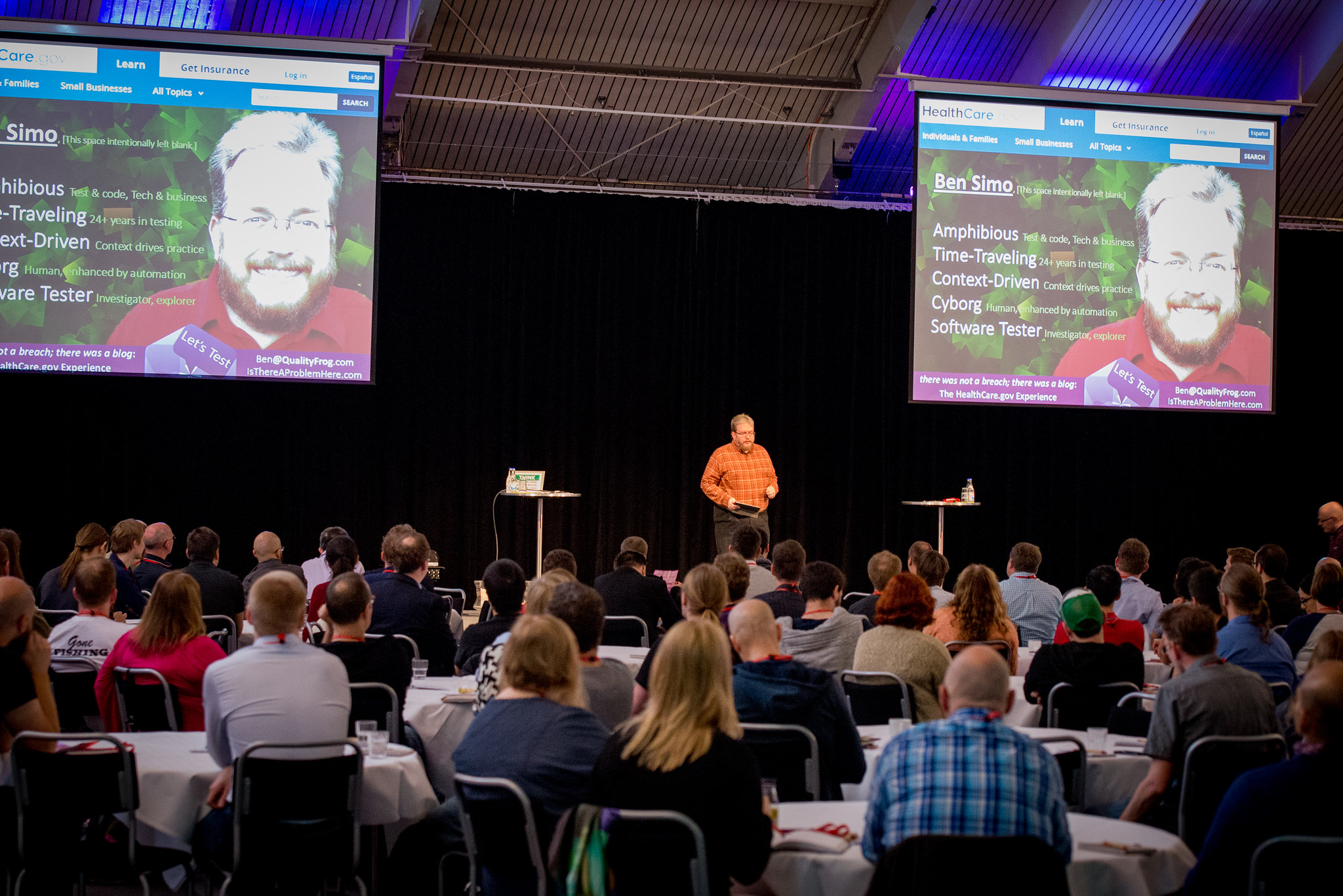
Day 1 started with keynote There Was Not a Breach; There Was a Blog by Ben Simo (@QualityFrog).

Photo from Let's Test Conference Flickr

This is actually the same keynote as in CAST last year and you can see it on Youtube – CAST 2014 Keynote . It was slightly modified, but mainly the same. Very good keynote, especially for those, who haven't seen CAST version. Ben Simo told very interesting true story combined with educational parts.
Main takeaway – if you find security bug don't do harm and don't publish info, that somebody may use to do harm.

Equipping You For the Unexpected Challenges of Testing by Emma Armstrong (@EmmaATester)
We needed to do some exercises in pairs and here comes a challenge – Michael Bolton (@michaelbolton) decided to join our pair for couple of minutes. I was in pair with Christina Ohanian (@ctohanian) (who did a workshop A Note on Notetaking Using Mindmaps and who draws beautiful mindmaps) and we needed to test prototype according to Shneiderman's Eight Golden Rules of Interface Design. Mr Bolton a little bit chided us about not making notes while we were exploring the application and shows as example which notes he would take in this case. Also he told us, that Jonathan Bach once told him, that he doesn't usually look for bugs during the exploring, but he looks for people, who can take advantage of application, which makes it easier to find important vulnerabilities, that can be exploited (it's not a quotation, it's how I remember it).
Main takeaways from workshop itself – be aware of time, complexity, skills and external factors, and you can use at least 5 tactics to deal with them: cheat sheets, heuristics, rubber duck, visualization and practice.

A Journey Towards Self-Learning by John Stevenson (@steveo1967)

Photo from Let's Test Conference Flickr

I really liked his book The Psychology of Software #Testing and even wrote a post about it.
All participants were randomly divided into 3 groups (and I randomly got into one group with my 2 colleagues) where we did a lot of exercises using ARCS model of John Keller (Attention, Relevance, Confidence, Satisfaction). Main takeaway – if you want to learn something try to write about it or teach it. Also interesting blog post was mentioned – Oracles Are About Problems, Not Correctness by Michael Bolton.


Me explaining to Siim Sutrop my values and priorities. Photo from Let's Test Conference Flickr

A tester's Walk in the Park by Ilari Henrik Aegerter (@ilarihenrik)
Unusual format of the session – we just walked and talked about testing. I liked it, despite the fact, that I expected more philosophy from Ilari Henrik. Venue is very beautiful and walking there is a great pleasure.


In the evening there was an open bar, TestLab and socialization.

Photo from Let's Test Conference Flickr

I really liked TestLab – it was great opportunity to test with great testers. For example, I tested a little bit some planning application with Rikard Edgren, who talked about serendipity on Nordic Testing Days 2014 and managed to crash the application by some random action.


At the end of the first day I was in some kind of cultural shock. It's a magical place for tester to be.


See posts about other days:
Let's Test 2015: Day 2, Exploring Web App (In)Security
Let's Test 2015: Final Day 3

November 11, 2014

TEDxTartu 2014

I am sure everybody knows what is TED and TEDx. On last Saturday we had TEDxTartu in my town. It is not about IT, more about sociology – the same we can say about testing. So I want to share some interesting ideas from there.


All pictures are taken from TEDxTartu 2014 Facebook album

First of all, I like that they determine talks by speakers, not by topics. There is no titles in program, there are only names (plus description of the talk is available in web). More I participate in different conference more I am convinced that this is better approach.

Margo Loor
Loor was talking about rationality. He believes that absolutely all people can master the art of argumentation – all you need is a little bit training and a lot of practice (my comment – many people think that arguing is inappropriate and rude, so they don't have practice). And his experience says that every kind of people can learn to be rational.

Loor asked some people to draw rationality and showed us some drawings. I really liked this one (in my reproduction):

It's like there is the Truth and you just moving in right direction.

One more good visualization of difficult thing (in my reproductions again):


Julius Juurmaa
Juurmaa was talking about creativity. He says that creativity is a new concept, for example, in Middle Age human didn't create anything – he did something. Also he was talking about some brain studies and the interesting thing is, that when our brain doesn't have any task (let's say it's resting) it still do some work and this work is shuffling different combinations of what we saw, what we did and what we know. And in that resting moment we can find some new ideas (= smart combination). That means, the more we experience – the more smart combinations we can find.

Riina Raudne
Raudne was talking about alcohol, but interesting thought that I had is philological. Estonians and Russians (I guess that other nationalities also) are using Facebook terminology in English – they say like and share, just in their language manner: for example, in Estonian [ˈlīkema] and [ˈshēērēma]. So they don't translate these terms and separate liking on real life and liking in the internet (unlike English speaking people). I guess it says something about role of internet in cultures.

Mait Müntel
Müntel has PhD in physics and had research experience at CERN. But he was talking about lingvist.io that he found. It's an online language learning program that helps you to learn new language in 200 hours. He was talking about his personal successful experience of learning French in smart way (way that is used in lingvist.io). So I hope to learn French there.

October 29, 2014

Agile Saturday XI

Summary of Agile Saturday XI conference.

Keynote The Soul of a Developer by Jaan Pullerits (MYJAR)

All pictures are taken from Agile Saturday XI Facebook album

I liked it. I can't say that it was very useful (does keynote should be useful?), but it was well told presentation with ideal structure.
Phrase of the talk – you should analyze yourself before others do.

Hope management in web applications from pentester's point of view by Elar Lang (Clarified Security)

Nive and useful talk. Some notes from it:
  • It was interesting to hear statistics about popular passwords in Estonia (not in the world or in USA). For example, a lot of passwords are some kind of modification of username. The most popular pattern in Estonia is first capital letter and number at the end (for example, User1).
  • In Estonia if authentication is done only with username and password it's the first vulnerability.
  • If you trust your password to the server you actually blindly trust it to the sysadmin (unknown man).
  • If sysadmin creates rules for passwords, it makes users to create weak passwords (with patterns).
  • If you build the team of juniors you can't expect quality (such as security).
And Elar Lang explained with one gif how people test their own code (as a tester who writes a code from time to time I confirm that it is true independently of you testing skills):

MVP-s At TransferWise - How To Build As Much As Needed And As Little As Possible by Peep Pullerits (TransferWise)
I didn't like it at all. The description of the talk was absolutely wrong. Basically speaker just made some simple prototype with Angular in front of the whole auditory. And it was meant to show how easy and quickly we can create prototypes. First of all – yea, actually you shouldn't always even code prototype, you can just draw it. Secondly, if you code something the most difficult part is to think up the logic of the application – he already did it at home. The second time-taking part is to create design (css styles) – he already had it as well. Thirdly, while he was coding (for n time) he had some bugs and answers how to fix them came from the audience, so you can't say how long does they take when you are alone.
And speaker did no summary or no analysis – just code, which supposed to be the proof.

Teaching Young Hackers by Peeter Marvet

Nice talk (looks like keynote).
  • Many teachers now are trying to teach kids to code in some language (python). This is wrong way, because language is just a tool. If teachers want to develop a thinking skill (which programming can help to develop), then they must to teach programming itself (not language) and to teach it with fun (so kids wanted to code to achieve some goal).
  • Making your application with copied parts of code from StackOverflow doesn't make you a programmer (or at least makes you very bad/pour programmer).
  • Speaker advised some interesting game for "learning to hack": https://hackerexperience.com.

Keynote Agile Is A Bad Strategy Or 5 Things Every Agile Practitioner Should Know About Strategy by Hanno Jarvet (Jarvet Consulting)

Basically I liked it – the speaker was very good with clear message and beautiful language, but it wasn't useful, again – nothing new. But, actually, perfect talk for keynote.

Lunch

One of the disadvantages of the conference was badly organized lunch (we waited in the queue for 40 minutes).

Briefing

One of the big advantages – briefing of the talks at the beginning of the conference. Each (or almost each) speakers briefly present their talks, so you can choose which one you want to visit not only by reading the description but also by seeing how speaker speaks (which is important). They do it at the every Agile Saturday conference – very good tradition.


Previous Agile Saturday conferences were held at the hotels, this one – at the university. So this time I had feeling that it's not conference, but some regular lectures at the university. Weird feeling.